Gakuran Roblox Beginner's Guide: Combat Basics, Fighting Styles, and Where to Go
 |
|
Gakuran doesn't play like most Roblox fighting games. There's no long questline pulling you from objective to objective — instead, you're dropped straight into a Japanese school setting where you socialize, spar with other players, pick up fighting styles, and wander the city on your own terms. With no required missions, the game is basically what you make of it. This guide covers the parts new players actually need to know: setting up your character, how combat really works, which fighting style is worth chasing, and which spots on the map are worth your time.
Contents
- Getting into the game
- Character creation: why height actually matters
- What ethnicity changes
- Rerolling your character
- Core combat controls
- Defense: dodging and blocking
- Posture: your hidden stamina bar
- Parrying: the strongest defensive tool in the game
- Guard breaks
- Chip damage through blocking
- Grapples
- Which fighting style is best right now
- Where to spend your time on the map
- Beginner tips that actually help

Getting into the game
Before you can play, you'll need to join Gakuran's official Roblox group. From there, character setup is quick — pick a name, choose a gender, and you're dropped into the world. Unlike a lot of Roblox titles, nothing forces you into a mission right away. You're free to hang around other players, drill your combat, explore, or jump straight into PvP. That may change as the game gets more content down the line, but right now it's built around player interaction and fighting rather than a structured storyline.
Character creation: why height actually matters
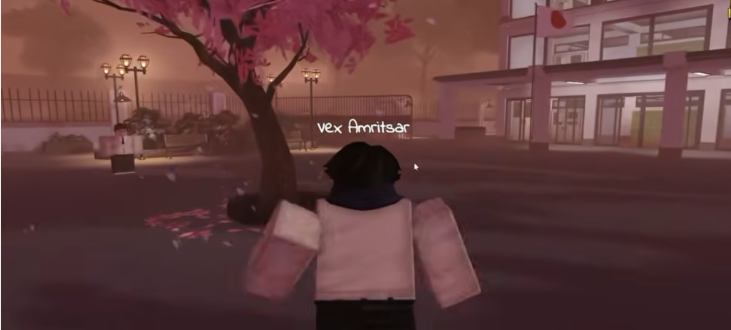
Your character generates with randomized traits on spawn, and you can either keep what you get or spend Robux to reroll specific features — mainly height and ethnicity. These aren't just cosmetic choices; height in particular has a direct, measurable effect on how you fight.
Going tall trades speed for raw power: more damage, more HP, longer attack range, and a bigger hitbox — at the cost of slower movement, slower attacks, and longer cooldowns.
Going short flips that entirely: faster attacks, quicker movement, shorter cooldowns, and a smaller hitbox to get hit in — but less health and less damage output to work with. The HP gap is minor around average height, but it opens up noticeably at the extreme ends of the height range.
What ethnicity changes
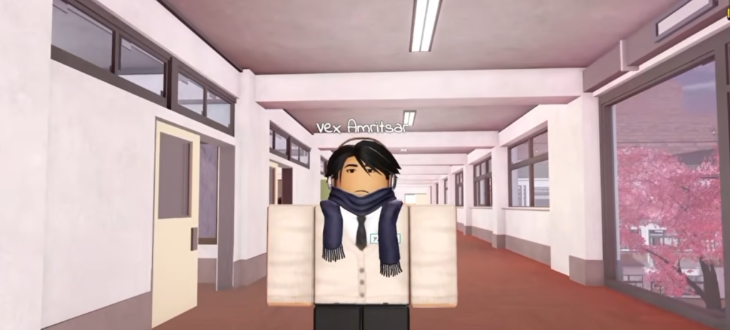
Every character also rolls an ethnicity on creation — Japanese, European, African, Middle Eastern, Indian, or Latin. Japanese characters come up far more often than the rest, landing around a 95% roll rate, with the other five options splitting the remaining 5%.
Ethnicity isn't purely cosmetic either — it shifts the height range your character can roll into, since each group has different average heights by gender. If you're chasing a very specific build (extremely tall, extremely short, or a particular ethnicity), expect to burn through a few rerolls to land it.
Rerolling your character
If your starting character isn't what you wanted, open the Stats menu on the left side of the screen to spend Robux rerolling height or ethnicity. Just know that every reroll is fully random — there's no way to lock in a guaranteed outcome, so budget your Robux accordingly.
Core combat controls
Press T to drop into your fighting stance before engaging another player — that's what unlocks the game's full combat toolkit.
Light attacks (M1)
Your bread-and-butter combo tool. It's a four-hit chain that you can either tap repeatedly or hold, and the fourth hit kicks the opponent backward. Wait too long between hits and the combo resets, so consistency matters more than raw speed here — most fights are decided by who lands their M1 chains cleanly.
Heavy attacks (M2)
M2 hits much harder than a light attack, but it comes with a catch: it can't be blocked outright and always breaks guard, meaning your opponent has to dodge, parry, or interrupt it to avoid eating the damage. Because it's high-commitment, throwing M2 out randomly is risky — it works best once you've already forced your opponent into a mistake.
Defense: dodging and blocking
Offense only gets you so far in Gakuran — defense is treated as equally important.
Dodging grants a short burst of invincibility frames, making it your go-to tool for slipping heavy attacks, breaking out of combos, or resetting your position mid-fight. The cooldown is short enough that you'll be using it constantly.
Blocking stops a lot of incoming damage, but it isn't free — every block you hold or attack you absorb chips away at your posture, so you can't just turtle behind block indefinitely.
Posture: your hidden stamina bar
Posture functions like a stamina meter that governs two things: sprinting and blocking. Every sprint and every blocked hit drains it. Once it bottoms out, your guard becomes trivially easy to break, you're wide open to incoming attacks, and blocking effectively stops working. Treat posture with the same respect you'd give your HP bar — running it to zero mid-fight is a fast way to lose.
Parrying: the strongest defensive tool in the game
Rather than holding block the whole fight, timing a block press to land at the exact instant an attack connects triggers a parry. A clean parry blocks the damage entirely, costs you no posture, stuns your attacker, and hands you a free combo opening. If there's one mechanic worth drilling early, it's this one — parry timing has an outsized impact on how well you do in PvP.
Guard breaks
Let your posture run out and your guard will break outright — leaving you stunned for roughly two seconds while your opponent gets a free combo in. M2 heavy attacks break guard automatically regardless of posture, which is exactly why experienced players don't bother blocking them — they dodge or go for the parry instead.
Chip damage through blocking
Blocking successfully doesn't mean you take zero damage. Every fighting style carries a Guard Pierce stat that determines how much damage leaks through a block — Guard Pierce I, for instance, lets around 10% chip through, with higher tiers letting even more through. In other words, a player who blocks constantly will still slowly bleed HP if their opponent's Guard Pierce is high enough.
Grapples
Attack at nearly the same moment as your opponent and you'll trigger a grapple — both characters lock up briefly, the one who attacked first typically wins the exchange, and the loser gets shoved back. Certain fighting styles carry passive bonuses that improve their odds of winning these clashes, which matters a lot in close-range brawls.
Which fighting style is best right now
Several fighting styles are available, each with its own passive bonuses and strengths, and every one of them is viable to some degree. That said, Wrestling currently stands out as one of the strongest overall picks for PvP, thanks to consistently solid performance across most matchups. If you're aiming to compete against experienced players, working toward Wrestling is a reasonable goal.
Where to spend your time on the map
Combat isn't the whole game — there's plenty to explore outside of fights, including the school itself, a basketball court, a coffee shop, a convenience store, a gas station, a fitness center, and various open city areas. The fitness center in particular tends to be a hotspot, since it's where a lot of players go to spar and test out different fighting styles against each other.
Beginner tips that actually help
- Prioritize learning to parry before you worry about long combo strings.
- Don't lean on blocking once your posture is running low — it stops protecting you.
- Dodge heavy attacks rather than trying to block them.
- Get comfortable with the timing of the four-hit M1 combo before anything else.
- Try a few different heights early on to find a playstyle that actually suits you.
- Spend time exploring and meeting other players — a lot of what Gakuran offers is social, not just combat.
- Hold off on Robux rerolls until you're sure which height or ethnicity you actually want.
- Work toward unlocking Wrestling if you want one of the stronger combat options.
Gakuran blends roleplay, exploration, and skill-based PvP without leaning on a traditional storyline, and its combat system has more depth than it looks like at first glance once posture, parries, grapples, and the fighting style system all start interacting. The fastest way to improve isn't memorizing combos in isolation — it's spending real time fighting other players, experimenting with different builds, and sharpening your timing along the way.